
Why didn’t early church leaders follow the Word of Wisdom?

Question
Gramps,
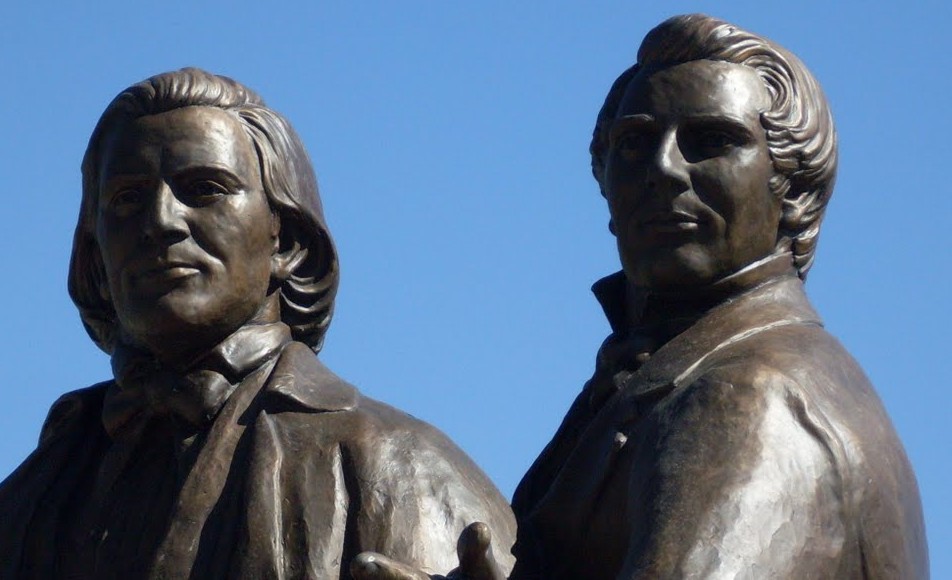
I was preparing a talk on the prophet Joseph Smith and ran into things that I found disturbing. Maybe you can clear it up. Both Presidents Smith and Young were involved in word of wisdom violations. President Smith never stopped drinking tea, sold alcohol and President Young ordered large quantities of alcohol and had a brewery. At first I thought this was anti Mormon lies, but the source material was church documents. I asked the good folks at FAIR and their explanation was that he word of wisdom was not as heavily emphasized then and wasn’t a part of the temple worthiness process until much later. The Lord spoke directly to Joseph. How did he not take every word as important?
Investigation
Answer
Dear Investigation,
The answer you received from FAIR was correct, but perhaps it can use some fleshing out. You seem to be operating under the assumption that the Church has always been what it is now, instead of it being a true and living Church (with living implying that things change, because that is what living things do).
Lets start with what Joseph and Brigham Young would understand about the revelation of the Word of Wisdom in Doctrine and Covenants, Section 89:
1 A Word of Wisdom, for the benefit of the council of high priests, assembled in Kirtland, and the church, and also the saints in Zion—
2 To be sent greeting; not by commandment or constraint, but by revelation and the word of wisdom, showing forth the order and will of God in the temporal salvation of all saints in the last days—
Note the first part of verse 2… “Not by commandment or constraint.” Both Joseph Smith and Brigham Young understood that very clearly. The Lord was giving them advice that they would be wise to take, but he was not commanding them to do so. This is followed by verse three which further explains the Lord’s purpose.
3 Given for a principle with promise, adapted to the capacity of the weak and the weakest of all saints, who are or can be called saints.
Notice that it is adapted to the weak. Why were they weak in this matter? Because they were raised in a culture where violations of the Word of Wisdom were common. Many of the Saints had already developed habits and addictions. They were very weak, and if the Lord had sent it by way of commandment, they would have broken such a commandment in their weakness and been condemned because of it. This is something the Lord clearly desired not to do to his Saints.
It took the creation of a culture among the Saints where children were taught in their youth to abstain and avoid habits and addictions for them to become stronger. As the collected strength of the Saints in this matter rose, so did the requirement to live the Word of Wisdom as a commandment. This is why, about one hundred years later, it became a worthiness requirement to enter the temple, and this is the status in which we find ourselves today.
Gramps
“adapted for the weak” ?.
I am one of the weak. yet, I love the church. I am not a member of the church for I am weak in so many ways. I have often, very often, thought of asking to join the church but I know I am weak. I am also an honest person. I cannot lie.
how can I speak the baptismal promises when I know ( not feel ) that I will most probably break the wow after I state the words in the baptismal or missionary discussions or with a stake leader but in my heart know that I wish to obey the church and yet know, by history, that I will break the wow,
“mirror, mirror on the wall, who is the greatest liar of them all ?”
( a Disney query from “snow white” but one I ask myself when I look into the mirror.
You might be interested to know that Joseph F. Smith wrote that the first few verses were added in later by mistake. They were part of an introduction that got misprinted as part of the revelation. In the end, it simply wasn’t required back then.
only one problem with all this…for Mormons who are raised(or worse who convert) in today’s culture tea and coffee and alcohol is heavily part of the popular culture, probably more so than in Smiths time..so why isn’t this taken into account ??? Surely Mormons of today have more reason to follow the “not a commandment or constraint” part – seems exceptionally hypocritical that Smith can break it and members today are unworthy if they do
you are also reading the “Not by commandment or constraint” out of context – it is immediately followed by the superior “but by revelation and the word of wisdom”, meaning that the order not to drink tea and alcohol is not merely a man made command or a restraint but a supposedly God given revelation. This means the exact opposite of what you have argued – and seems to be a more accurate reading of the text. http://mit.irr.org/word-of-wisdom-it-divine-revelation
Also a year after Joseph Smith supposedly received the order not to drink tea etc he made it official that mormons who didn’t obey were not “worthy to hold an office” – http://mit.irr.org/word-of-wisdom-it-divine-revelation …….mate your deceit is beyond compare